

Change Maker
The program aims to foster long-term strategic resilience within the increasingly volatile digital marketplace. As the transition from Web3 to a more autonomous, AI-integrated Web4 accelerates, organizations without a robust foundation risk becoming reactive rather than proactive.
Participation in this 12-month initiative enables organizations to develop a future-ready infrastructure that can adapt to emerging decentralized finance (DeFi) models and spatial web technologies.

Executive Summary
 Web2 transformed the professional environment by enabling video conferencing and cloud-based collaboration, enhancing communication and facilitating remote work. Currently, a significant paradigm shift is underway as Web3 and Web4, characterized by decentralization, community ownership, and advanced technologies, are increasingly viewed as essential for business sustainability. Futurists and industry advocates caution that disregarding this transition presents substantial risks. Centralized Web2 models are experiencing heightened consumer distrust, and failure to implement transparent, community-oriented frameworks may result in customer alienation. Additionally, neglecting these technological advancements could lead to the loss of competitive advantages in emerging revenue streams and contribute to a “talent exodus” as top professionals seek employment with innovative, forward-looking organizations.
Industry leaders are actively shaping the future by advancing their Web3 initiatives. In the financial sector, platforms such as Robinhood have democratized investment through blockchain technology, while companies like ConsenSys illustrate the practical potential of decentralized applications for businesses. The nature of internet interaction is also evolving, exemplified by the Brave browser, which incentivizes user attention with cryptocurrency. Collectively, these developments indicate a significant shift toward community ownership and privacy, fundamentally redefining global value exchange.
To succeed in today’s digital landscape, organizations must prioritize proactive knowledge acquisition. The 12-month co-discovery, design, and implementation program has been developed by subject matter experts to enable teams to actively participate in digital transformation initiatives. Participation in this program will help future-proof the organization by equipping employees with the necessary skills and confidence to manage complex emerging technologies. The Change Maker Framework facilitates collaborative adoption processes, promoting internal ownership of the transition rather than imposing change through top-down directives.
Throughout the program, participants receive expert guidance via structured learning sessions led by distinguished guest speakers specializing in Web3 and Web4 implementation. The curriculum emphasizes practical solutions over abstract theory. Through collaborative workshops and case studies, participants develop and implement strategies tailored to specific organizational objectives. Success metrics are defined, and progress is systematically tracked to ensure measurable outcomes aligned with long-term goals. Engaging in this program represents a strategic investment in future readiness, enabling organizations to maintain a competitive advantage and realize the transformative potential of emerging web technologies.
In addition to the technical integration of blockchain and decentralized protocols, this transition signifies a significant cultural transformation in organizational operations. Shifting from Web2’s hierarchical, compartmentalized structures to the collaborative ecosystems of Web3 and Web4 necessitates a comprehensive rethinking of leadership and transparency. Our program addresses this human dimension by cultivating a mindset centered on shared governance and open-source innovation. By dismantling conventional information barriers, your teams will develop the capacity to function in environments where trust is embedded in the code and value is distributed more equitably among all stakeholders. This cultural adaptability ensures that your organization not only adopts new technologies but also becomes fluent in the emerging language of the future economy.
The program aims to foster long-term strategic resilience within the increasingly volatile digital marketplace. As the transition from Web3 to a more autonomous, AI-integrated Web4 accelerates, organizations without a robust foundation risk becoming reactive rather than proactive. Participation in this 12-month initiative enables organizations to develop a future-ready infrastructure that can adapt to emerging decentralized finance (DeFi) models and spatial web technologies. Rather than a single upgrade, this process represents a fundamental evolution of organizational capabilities, positioning participants at the forefront of the next industrial revolution, where data sovereignty and automated intelligence distinguish industry leaders.
The urgency of this transition is highlighted by the diminishing window for early-adopter advantages. Organizations that delay in the pursuit of optimal timing frequently incur higher costs for talent and technology already acquired by early entrants. The program offers a structured environment that enables calculated risk-taking and facilitates experimentation within a secure, expert-guided framework. Upon completion of the 12-month program, participating organizations will progress from passive observation to active leadership, positioning themselves to leverage the transformative potential of a decentralized world and establish a lasting legacy of innovation.
Program Methodology
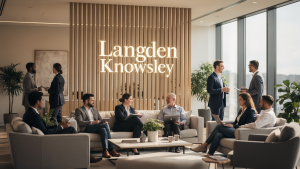 Each module is structured as a high-impact, multi-modal learning experience that emphasizes engagement and knowledge retention. Sessions begin with introductions and key questions, followed by a targeted review of previous material to maintain continuity. This initial phase leads into a comprehensive examination of core themes, supported by expert guest lecturers and multimedia demonstrations. By integrating perspectives from leading practitioners with organized presentations, the curriculum offers a comprehensive understanding of the subject, enabling learners to appreciate both theoretical concepts and practical challenges within the contemporary technological environment.
The core of the methodology is interactive application and collaborative discovery. Participants engage in brainstorming sessions, role-plays, and tool-sharing exercises that foster a supportive professional community. By analyzing localized case studies and conducting hands-on exploration of emerging technologies, participants deconstruct successful implementations to understand underlying processes. These group activities are intentionally designed to simulate real-world scenarios, enabling safe experimentation and collective problem-solving essential for mastering decentralized tools and smart technology frameworks in a collaborative, learner-centered setting.
To facilitate translating knowledge into tangible organizational value, the final segment of each module emphasizes guided implementation and structured action planning. Participants receive expert mentorship as they apply new frameworks within their organizational contexts, thereby bridging the gap between theoretical concepts and operational practice. This process results in detailed roadmaps that include specific milestones, assigned responsibilities, and immediate next steps. By prioritizing actionable outcomes, the program ensures that each participant departs with not only enhanced knowledge but also a practical, time-bound strategy designed to foster innovation and measurable success in their respective projects.
Program Curriculum
- Workshop 1 Strategy Foundations
- Workshop 2 Symbiotic Future
- Workshop 3 Opportunity Discovery
- Workshop 4 Strategic Alignment
- Workshop 5 Implementation Roadmap
- Workshop 6 Process Mapping
- Workshop 7 Change Management
- Workshop 8 Project Planning
- Workshop 9 Integration Alignment
- Workshop 10 Continuous Improvement
- Workshop 11 Regulatory Landscape
- Workshop 12 Work Future
Program Objectives
Workshop 1
Strategy Foundations

This module covers the fundamentals of strategy design, planning, execution, and tracking. It provides an overview of Web3 concepts, including decentralization, blockchain technology, DAOs, NFTs, smart contracts, and oracles, emphasizing their transformative potential. The change maker framework introduces a collaborative approach to navigating change and leveraging Web3 opportunities alongside existing operational methods. The change readiness assessment enables evaluation of an organization’s current state and preparedness for Web3 adoption.
Workshop 2
Symbiotic Future

In this module, we will explore the role of artificial intelligence in shaping Web3 applications and its potential impact on various industries. We will assess the potential of artificial intelligence and automation to enhance data security, streamline automation, and improve decision-making within Web3 environments. We will determine approaches for leveraging artificial intelligence ethically and responsibly within a Web3 vision and governance framework.
Workshop 3
Opportunity Discovery

A grounded approach is essential to move beyond the hype surrounding Web3 and to identify its real-world potential for organizational transformation, regardless of whether decentralized technologies are ultimately adopted. The process should begin with collaborative visioning, which employs methods such as brainwriting and facilitated discussions to clarify key questions and collaboratively define desired outcomes. Subsequently, attention turns to mapping tasks and strategic alignment, where specific actions are identified and prioritized based on their relevance to organizational objectives and appropriateness for Web3 integration.
Workshop 4
Strategic Alignment

Workshop 5
Implementation Roadmap

An effective execution framework is essential. This begins with establishing accountability and tracking systems, which involve developing a comprehensive plan to monitor progress and promote team ownership and sustained commitment. Collaborative project scheduling enables the co-creation of realistic timelines and milestones, ensuring that each team member understands their defined roles and responsibilities. Finally, implementing change management strategies equips you with the communication and stakeholder engagement skills required to address resistance and guide the organization successfully through transitions.
Workshop 6
Process Mapping

Workshop 7
Change Management

This section focuses on crafting a compelling change narrative, which involves developing a clear and inspiring story that communicates the specific benefits of Web3, smart technology, and broader strategic goals to all stakeholders. To operationalize this narrative, attention is given to building a change management team by identifying and empowering internal champions who can effectively lead the transition. Finally, managing resistance and building adoption requires implementing targeted strategies to address concerns directly, thereby facilitating the necessary buy-in for a smooth and lasting organizational transition.
Workshop 8
Project Planning

Workshop 9
Integration Alignment

Workshop 10
Continuous Improvement

To effectively embed these advancements, organizations should prioritize building a culture of innovation that supports ongoing exploration, experimentation, and rapid adaptation within the Web3 and strategic landscape. This culture is maintained through the measurement and communication of value, in which previously defined key performance indicators are rigorously tested to assess the real-world impact of smart technology initiatives and to articulate tangible benefits for the organization. Establishing formal feedback loops and iteration mechanisms ensures that progress is consistently evaluated, enabling the strategy to evolve based on data and user experience for sustained, long-term improvement.
Workshop 11
Regulatory Landscape

Workshop 12
Work Future

This final module adopts a strategic, future-oriented perspective, enabling organizations to actively influence the evolving landscape of work within a Web3-driven ecosystem. By integrating lessons learned from initial implementation with emerging trends projected for 2026, the module identifies significant opportunities for decentralization. Participants will examine how to apply these insights to redefine professional collaboration, positioning the organization not only to adapt to the decentralized economy but also to lead in establishing new standards for transparency, autonomy, and digital-first innovation.
Client Testimonials
 “The modular structure of this program is a masterclass in professional development. Unlike typical workshops that leave you with a pile of notes and no direction, the Implementation & Action Planning segments ensured I walked away with a concrete roadmap. Integrating Web3 concepts into our existing legacy systems felt daunting, but the guided tool application provided the clarity we needed to move from theory to a functional 2026 strategy. It’s not just a course; it’s an incubator for organizational change.”
 “What makes this program different is the practical advice and the real case studies. Listening to people who work with today’s rules and technology gave our team a complete view. The group sessions let us test our ideas safely before using them. We didn’t just learn about smart tech; we learned how to create a culture that supports it.”
 “What sets this program apart is its practical advice and real case studies. Hearing from professionals who work with current regulations and technology provided our team with a comprehensive perspective. The group sessions allowed us to test our ideas in a supportive environment before implementation. We gained not only technical knowledge but also learned how to foster a culture that embraces smart technology.”
More program testimonials are available to clients upon request.
